How we help teachers teach well
Openly Learning gives every educator the same four tools: a guide that plans your class with you, templates for the pages families expect, a fair minimum price, and five steps for thinking a lesson through. All of them are free.
1. The Class Guide plans your class with you
The Class Guide asks about a dozen quick questions: who the class is for, the goal, the format, how long it runs, how you'll grade, how many seats, and your price. It turns your answers into a class outline and fills in the class builder for you, so you start from a plan instead of a blank page. Most classes run 8 weeks, once a week, unless you choose otherwise.
Want to try it first? The Class Demo lets you build a whole practice class, publish it and see it the way a family will, with no account.
2. Templates for the pages families expect
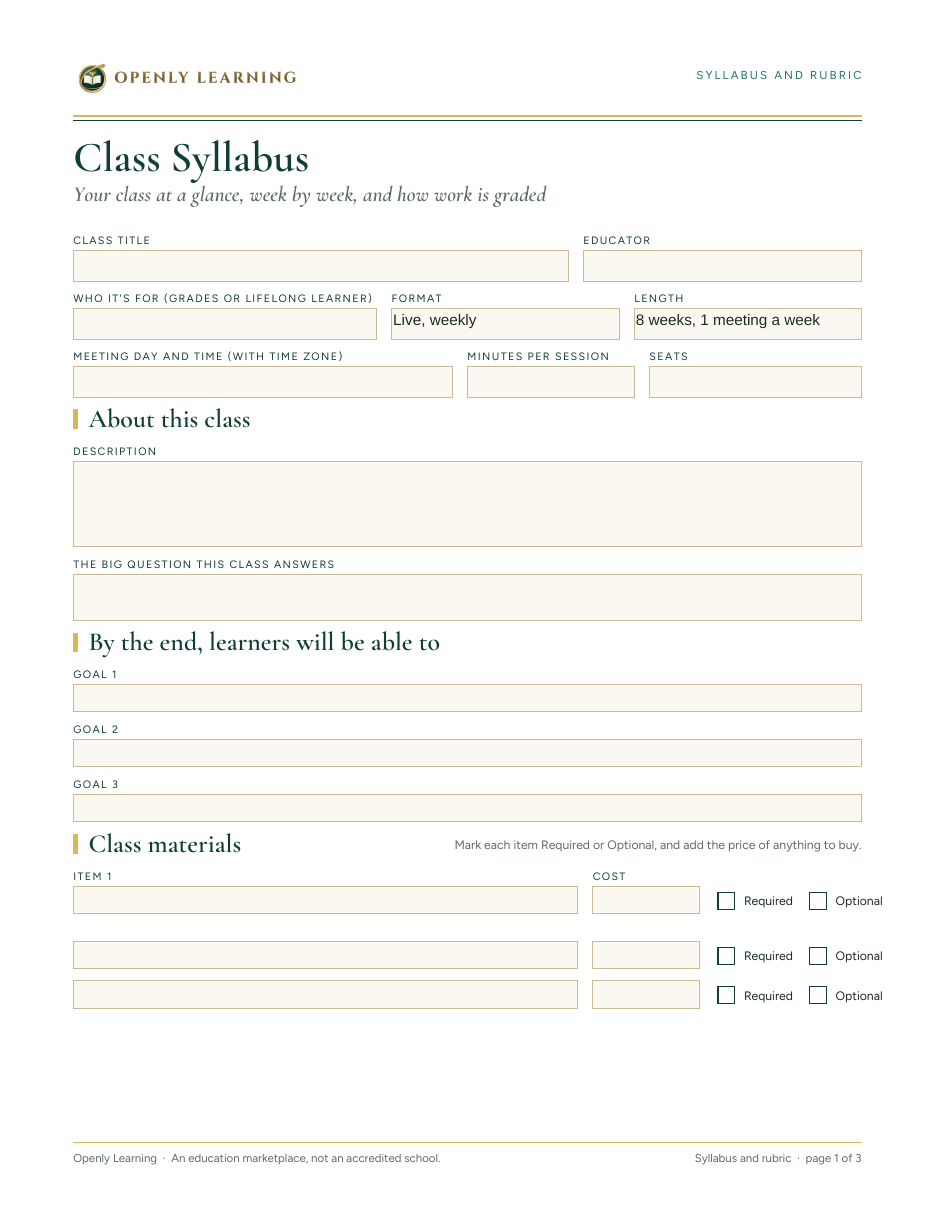
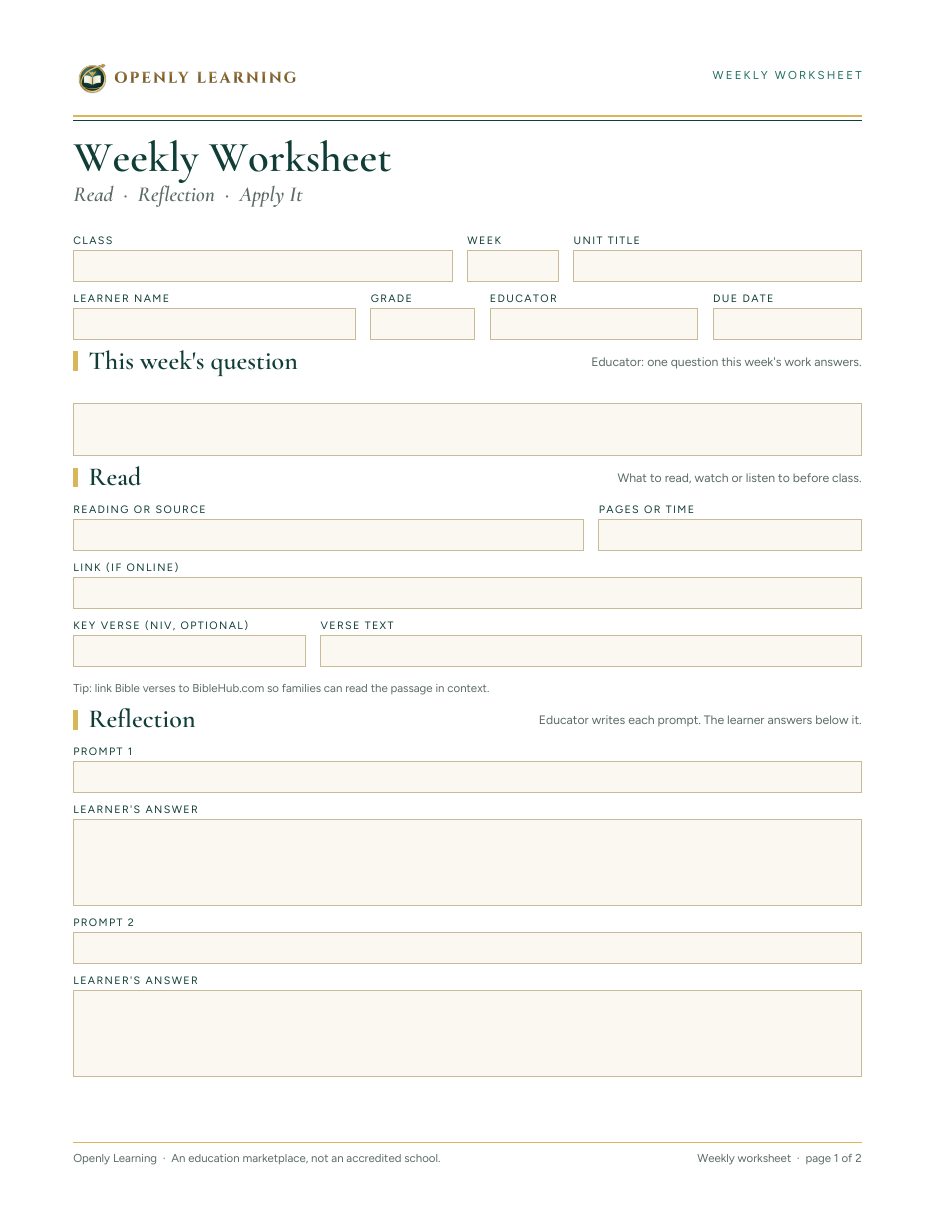
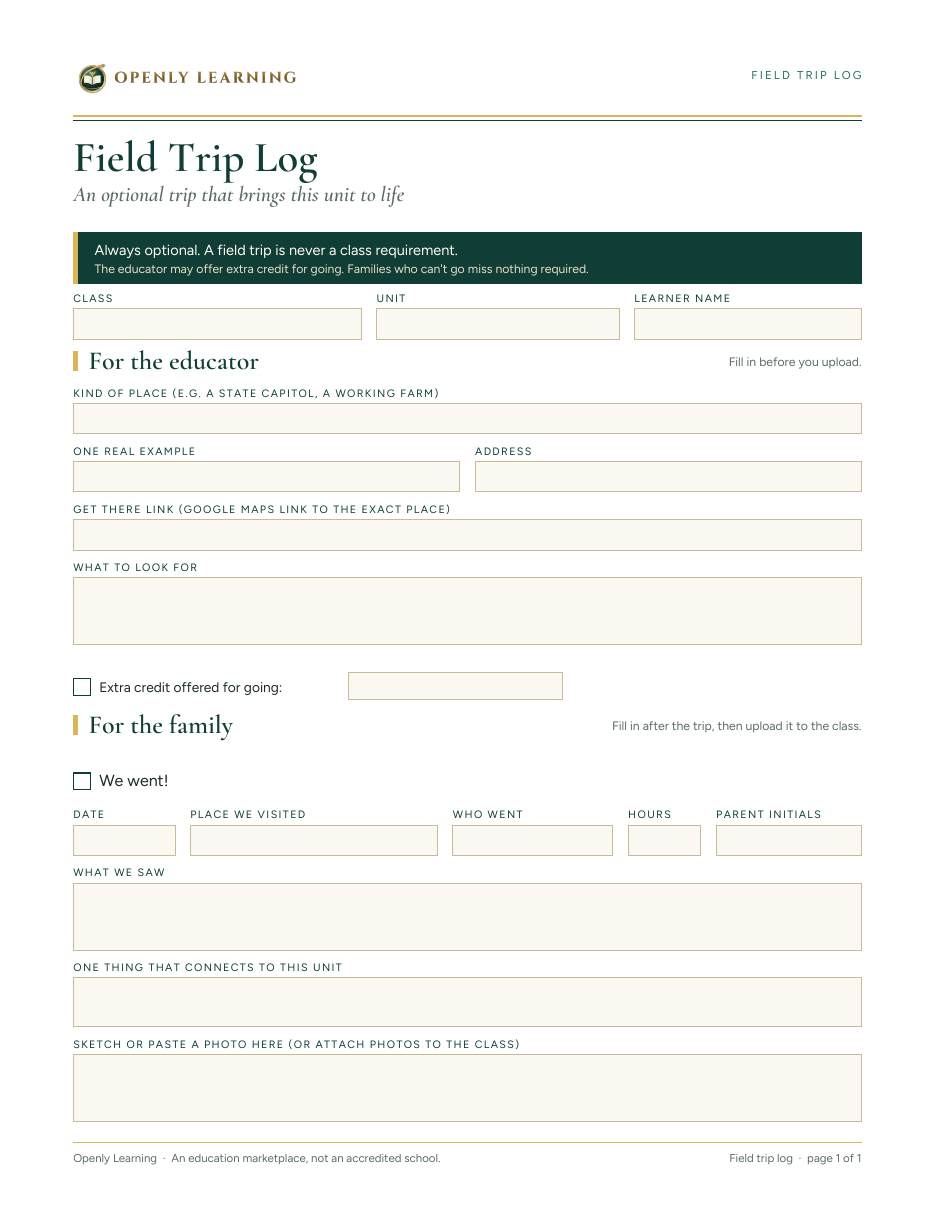
Inside the class builder, a Syllabus template, a Worksheet template and a Field trip template each fill in a ready-made section you can edit. You can also download the same three as fillable PDF or Word files.
3. A fair minimum price
No class on Openly Learning can be priced under $25, and there is no upper limit. A price floor means no teacher is pushed into a race to the bottom, and families know a class here is real work by a real teacher. You set any price above it, and the rate calculator on your dashboard shows what you take home. Read how pay works.
4. Five steps for thinking a lesson through
We use these five steps whenever we plan something new, and we share them so you can plan your classes, and teach your learners to think, the same way.
Find the real problem
Look past the symptom. "My learner hates fractions" may really be "my learner never saw why fractions matter."
Break it into parts
Name the key pieces, the limits you're working within, and the decisions you need to make.
Challenge your assumptions
Ask what evidence supports your idea, and what would prove it wrong.
Compare your options
Weigh the benefits, risks, costs and long-term effects of each one. Look at it the way a parent, a learner and another teacher would.
Test small, then adjust
Try it with one lesson or one week, watch what happens, and change course. You don't need to be certain before a small test.
Openly Learning is an education marketplace, not an accredited school. Questions? Email learn@openlylearning.live.